Bricks And Minifigs Net Worth 2026: Revenue, Franchise Cost & Business Value
Bricks And Minifigs Net Worth has become a popular search as the LEGO resale franchise continues to expand across the United States and other markets. The company has built a large business around buying, selling, and trading LEGO sets, bricks, minifigures, and related products.
However, Bricks & Minifigs is a privately held business. It does not publish an official company net worth like a public company would publish financial statements and market value data.
Because of this, readers should be careful with websites that give one exact Bricks & Minifigs valuation without explaining how that number was calculated. Revenue, store sales, franchise investment, and company net worth are different financial measures.
Available franchise information still gives us a useful picture of the size of the business. Current disclosure data shows hundreds of operating locations, strong franchise growth, and annual store revenues that can reach well above $1 million for high-performing locations.
The company’s growth also reflects the wider popularity of LEGO collecting. New sets, retired products, rare minifigures, bulk bricks, and secondhand LEGO items have created a strong resale market.
What Is Bricks And Minifigs?
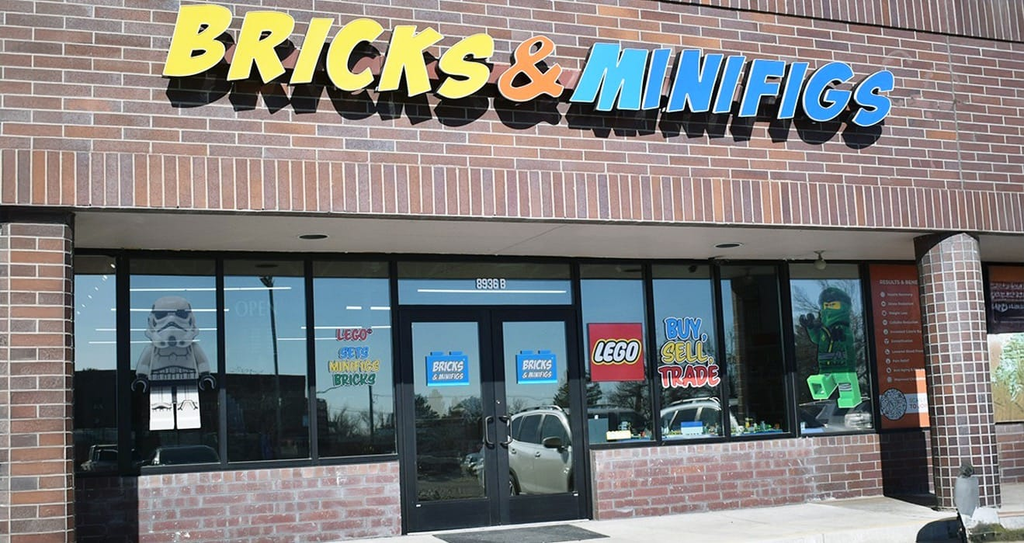
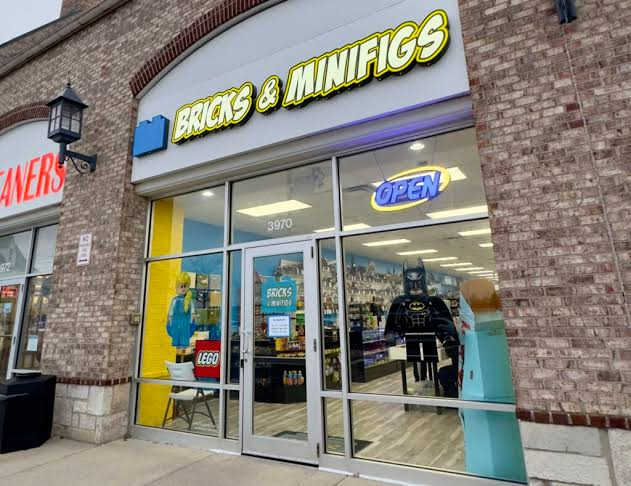
Bricks & Minifigs is a retail franchise that specializes in LEGO products. Its stores allow customers to buy, sell, and trade LEGO sets, loose bricks, minifigures, accessories, and other related items.
Unlike a normal toy store that focuses mostly on new products, Bricks & Minifigs has a strong secondhand business model. Customers can bring LEGO products into stores and receive cash or store credit based on what the location is willing to offer.
This creates a circular marketplace. A set that one customer no longer wants may become a valuable collectible for another buyer.
Stores may carry both newer products and discontinued LEGO items. Some locations also sell rare minifigures, vintage sets, individual pieces, accessories, and custom products from approved vendors.
Bricks & Minifigs also aims to create a community around LEGO collecting. Stores may host birthday parties, activities, workshops, trading events, and other local programs.
This combination of retail sales, resale activity, events, and franchise expansion has helped the company grow beyond a small specialty store into a recognizable franchise system.
Bricks And Minifigs Net Worth in 2026
There is currently no confirmed public figure for Bricks And Minifigs Net Worth in 2026.
The company is privately owned, so it does not have a public stock-market capitalization. Detailed company-wide profit, debt, cash holdings, assets, and liabilities are also not publicly reported in the same way they would be for a listed corporation.
For this reason, assigning an exact figure such as $10 million, $50 million, or $100 million would require assumptions that cannot be confirmed through available public financial information.
What we can examine is the scale of the franchise system.
Bricks & Minifigs had more than 200 locations by 2026. Public franchise filing data shows 217 franchised outlets and six company-owned locations at the end of the relevant reporting period, giving a total of 223 locations.
Store-level revenue is also significant. According to 2025 financial performance data included in the 2026 disclosure, 153 franchised locations that were open for the full year generated average annual revenue of roughly $507,684.
The median annual revenue was around $467,539.
These figures show that Bricks & Minifigs operates a sizeable franchise network. However, they should not be multiplied by the number of stores and described as company net worth.
Most store sales belong to independently owned franchise businesses. The franchisor generally earns money through franchise fees, royalties, brand-related fees, and other payments rather than receiving every dollar generated by each store.
Therefore, the safest conclusion is that Bricks & Minifigs has developed a valuable and growing franchise system, but its exact private-company valuation is not publicly confirmed.
Is Bricks And Minifigs Net Worth Publicly Confirmed?
No official Bricks And Minifigs net worth has been publicly confirmed.
This is important because the word “net worth” is often used incorrectly when discussing private companies.
For an individual, net worth normally means total assets minus total liabilities.
For a business, people may use the term to describe shareholder equity, estimated market value, or the estimated price another company might pay to acquire the business.
These are not necessarily the same number.
A private company does not have a constantly visible market capitalization because its shares do not trade openly on a major stock exchange.
A professional valuation would normally consider factors such as annual revenue, operating profit, cash flow, debt, intellectual property, franchise agreements, growth rates, brand strength, and comparable business transactions.
Without all of those details, any exact estimate should be treated as speculation rather than a confirmed financial figure.
Bricks And Minifigs Revenue and Financial Performance
Revenue provides more useful public information than estimates of company net worth.
Financial disclosure data for 2025 included performance figures for established Bricks & Minifigs franchise locations.
For 153 franchised locations that operated throughout the full 2025 calendar year, average annual revenue was approximately $507,684.
Median annual revenue was approximately $467,539.
The highest-revenue location in the reported group generated approximately $1.78 million during the year.
The lowest reported location generated approximately $188,084.
These numbers show the wide range of possible store performance.
An average is useful, but it does not mean a new franchise owner will automatically generate around $500,000 in annual sales.
Location, operating costs, local demand, inventory selection, management, competition, rent, customer service, and the age of the store can all influence results.
Revenue should also never be confused with profit.
A store might generate $500,000 in sales but still need to pay for inventory, employees, rent, utilities, insurance, royalty fees, marketing, payment processing, and other operating costs.
Also Read: Mary Kate And Ashley Net Worth
How Does Bricks And Minifigs Make Money?
Bricks & Minifigs has several revenue streams.
The most obvious source is the sale of LEGO products.
Stores can sell new sets, pre-owned sets, minifigures, loose bricks, accessories, and collectible items.
The secondhand model is especially important.
A store may buy a used LEGO collection from a customer and later sell those items individually or as complete products at a higher total price.
The difference between acquisition cost and resale price can contribute to the store’s gross margin.
Stores can also earn money from events and activities.
Birthday parties, workshops, camps, collector events, and other programs may create additional income while also bringing more customers into the location.
For the parent franchise organization, income can include franchise fees and recurring payments from franchisees.
This means there are two levels to the business model: individual store economics and franchisor economics.
Bricks And Minifigs Franchise Business Model
Bricks & Minifigs operates mainly through franchising.
Instead of the parent company opening and operating every store itself, independent business owners can purchase the right to operate under the Bricks & Minifigs name.
The franchisee invests money to open the store.
In return, the franchise system provides branding, operating methods, training, business systems, and other forms of support.
The franchise model allows the brand to expand faster than it might if the company had to finance every location itself.
It also allows local owners to run stores while following standards established by the franchisor.
For Bricks & Minifigs, the model works particularly well because LEGO collecting has strong local communities.
A franchise location can act as both a retail store and a gathering place for collectors, families, children, and hobbyists.
Bricks And Minifigs Franchise Cost
Opening a Bricks & Minifigs location requires a significant investment.
Current company franchise information lists an estimated total initial investment of approximately $303,500 to $597,500.
The final amount can vary based on factors such as store size, location, lease terms, construction costs, inventory requirements, equipment, and local expenses.
Some company marketing pages have displayed slightly different investment ranges at different times.
Prospective owners should therefore use the latest Franchise Disclosure Document rather than relying on an older online figure when making an investment decision.
The total investment covers much more than the right to use the brand name.
A large portion goes toward inventory, commercial property improvements, store fixtures, equipment, signs, technology, and opening expenses.
Initial Franchise Fee and Other Startup Costs
The initial Bricks & Minifigs franchise fee is listed at $40,000.
This payment provides access to the franchise system and typically includes rights connected with an approved territory, training, operating guidance, and other franchise resources.
Starting inventory represents one of the largest expenses.
Company franchise materials have listed starting inventory at approximately $100,000 to $150,000.
That makes sense for a resale-focused retailer because customers expect to find a wide selection when they enter the store.
Real estate and improvements may also require a large investment.
Depending on location and store conditions, a franchisee may spend tens of thousands of dollars preparing the retail space.
Fixtures, display areas, point-of-sale equipment, signs, and opening marketing also contribute to the total cost.
Bricks And Minifigs Royalty and Marketing Fees
Franchisees usually continue paying fees after their stores open.
Current franchise disclosure information lists an ongoing royalty connected to gross revenue.
The royalty has been reported at 6% of gross revenue, subject to the terms of the franchise agreement.
Brand or advertising-related contributions may also apply.
These fees help support services provided by the franchise system, but they also reduce the amount of store revenue remaining for other expenses and owner profit.
For this reason, anyone studying franchise economics should look beyond gross sales.
A store can have strong revenue while still producing a smaller owner income if operating expenses are high.
How Much Do Bricks And Minifigs Franchise Owners Make?
There is no single salary or income figure that applies to every Bricks & Minifigs franchise owner.
An owner does not normally receive a fixed salary from the parent company.
Instead, the owner’s financial return depends on the performance of their individual business.
A store must first generate revenue.
From that revenue, the business pays the cost of inventory, rent, wages, utilities, insurance, royalties, marketing expenses, taxes, technology costs, and other expenses.
What remains may become operating profit or owner income, depending on how the business is structured.
That means a store generating $600,000 annually does not provide its owner with $600,000 of personal income.
Publicly available franchise information provides useful revenue figures, but it does not guarantee a particular owner take-home amount.
Owners should also consider debt payments if they borrowed money to cover startup expenses.
A heavily financed store may have less cash available for its owner than a similar store opened with more personal capital.
Bricks And Minifigs Average and Median Store Revenue
Average and median revenue can help explain how established Bricks & Minifigs locations perform.
For full-year franchised locations covered by 2025 performance reporting, average annual revenue was approximately $507,684.
The reported median was approximately $467,539.
The difference between the average and median suggests that some higher-performing stores raise the overall average.
The highest-revenue location in the group reported approximately $1.78 million.
Meanwhile, lower-performing locations reported much smaller sales totals.
These differences matter when evaluating a franchise.
A potential owner should study the complete distribution of store results rather than focusing only on the highest-performing location.
The median figure can sometimes provide useful context because half of qualifying stores performed above it and half performed below it.
Still, neither an average nor a median guarantees future performance.
Bricks And Minifigs Profit vs Revenue
Revenue and profit have very different meanings.
Revenue is the total money a business earns from sales before most expenses are deducted.
Profit is what remains after relevant business expenses are paid.
For example, imagine a Bricks & Minifigs store sells $500,000 worth of products during a year.
That $500,000 is not automatically the owner’s income.
The store first needs to cover the cost of buying inventory.
It may also pay employee wages, rent, utilities, insurance, payment-processing fees, software costs, marketing expenses, franchise royalties, repairs, taxes, and other costs.
If $450,000 goes toward total costs, the remaining amount would be much smaller than the original revenue figure.
This is why articles that use franchise revenue as proof of net worth can be misleading.
Revenue shows business activity. Profit shows how much financial value remains after costs.
Who Owns Bricks And Minifigs?
The history of Bricks & Minifigs includes both its original founders and later ownership.
John Masek and David Ortiz created the original business concept.
The two had experience in the LEGO resale community and combined their knowledge to build a physical retail business.
Ammon McNeff and Matt McNeff later became involved with the franchise.
They first entered the system as franchise owners and eventually acquired the company from its earlier owners.
Current franchise information identifies BAM Franchising, Inc. as the franchisor.
Ammon McNeff has been identified as chief executive officer, while Matthew McNeff has held a senior operating leadership role.
This ownership history helps explain how Bricks & Minifigs developed from a small resale operation into a much larger franchise system.
Bricks And Minifigs Founders and Company History
Bricks & Minifigs traces its beginnings to John Masek and David Ortiz.
The two reportedly met through the LEGO resale community in the Portland area.
At first, they were competitors.
Both were interested in purchasing and reselling LEGO products.
They eventually realized that their different skills could work well together.
Ortiz had connections within the LEGO community, while Masek brought retail knowledge.
They opened the first Bricks & Minifigs location in 2009 in Battle Ground, Washington.
A second location followed in Canby, Oregon, in 2010.
The concept later developed into a franchise.
Bricks & Minifigs began franchising around 2011.
As the number of stores increased, the business moved from being a regional specialty retailer toward becoming a much larger franchise network.
Ammon and Matt McNeff later became franchisees after learning about the brand.
Their involvement eventually expanded beyond ownership of an individual store.
They later acquired the wider company and helped accelerate the franchise’s growth.
How Bricks And Minifigs Grew Its Franchise Network
Franchising has played the central role in the company’s expansion.
Opening a large number of company-owned stores requires significant capital.
Each new location may require hundreds of thousands of dollars for inventory, property improvements, equipment, and launch expenses.
The franchise approach shifts much of that investment to individual franchise owners.
That allows the brand to enter new cities while franchisees invest their own capital into local stores.
Bricks & Minifigs also benefits from the size of the LEGO fan community.
LEGO appeals to several age groups.
Children enjoy building sets, while teenagers and adults may collect rare products or build large custom creations.
Some customers purchase discontinued sets as collectibles.
Others simply want cheaper used bricks for creative projects.
This broad customer base gives franchise locations several types of shoppers to serve.
How Many Bricks And Minifigs Locations Are There?
Bricks & Minifigs has grown rapidly.
Public 2026 franchise disclosure information reported 217 franchised outlets at the end of the previous reporting year.
It also reported six company-owned outlets.
That produces a combined total of 223 operating locations in the reported system.
The franchised store count increased substantially from the beginning of the year.
Disclosure data showed 154 franchised outlets at the start of the period and 217 at the end.
That represents a net increase of 63 franchised locations.
Store numbers can continue changing as new locations open, franchises transfer ownership, or individual units close.
For this reason, the current total on any specific day may differ from annual disclosure figures.
Still, the data shows that Bricks & Minifigs has moved well beyond its original two-store operation.
Main Sources of Bricks And Minifigs Income
The company’s business model benefits from several possible sources of revenue.
At the store level, product sales remain the core activity.
Customers can purchase complete LEGO sets, individual minifigures, bulk bricks, accessories, and other products.
Used merchandise is particularly important.
Secondhand inventory allows a store to buy products directly from customers and return those products to the retail market.
New merchandise adds another option for shoppers who want unopened products.
Stores can also use parties, events, workshops, and other activities to diversify income.
At the franchise-company level, income can come from initial franchise fees and ongoing franchise-related payments.
The combination creates a business model that is less dependent on one single product category.
Buying, Selling, and Trading LEGO Products
Buying, selling, and trading form the center of the Bricks & Minifigs customer experience.
A customer with unwanted LEGO items can bring them to a location.
The store may examine the products and make an offer.
Factors such as condition, completeness, rarity, demand, and expected resale value can affect the amount offered.
Customers may receive cash or another form of value depending on the store’s policies.
Trading can help keep customers inside the Bricks & Minifigs ecosystem.
Instead of selling an old collection and leaving, a customer may trade it toward another set or collectible.
This can increase repeat visits.
It also provides stores with a constantly changing inventory.
Customers may return regularly because they do not know what rare or unusual product might appear next.
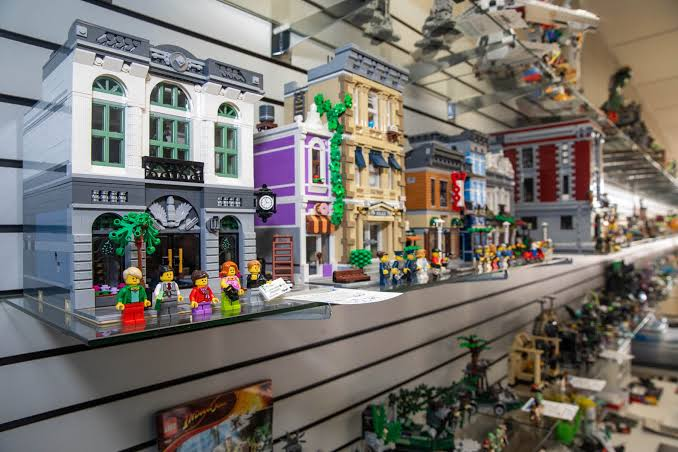
Minifigures, Used Sets, Bulk Bricks, and New Products
Minifigures are an important part of the business.
LEGO has produced a huge number of characters across themes such as superheroes, movies, fantasy, space, cities, and licensed entertainment brands.
Some figures become difficult to find after their original sets leave production.
Collectors may therefore purchase individual minifigures instead of buying complete sets.
Used LEGO sets create another major category.
Customers who want a retired set may search the resale market after it is no longer available from normal retail channels.
Bulk bricks appeal to builders who care more about creating their own designs than owning a particular boxed set.
Stores may sell loose pieces by quantity, container, weight, or another pricing method.
New products allow Bricks & Minifigs to serve shoppers who prefer unopened merchandise.
Together, these categories give stores a wide range of price points and customer types.
Events, Parties, and Other Revenue Sources
Bricks & Minifigs stores do more than sell products.
Many locations position themselves as community destinations.
Birthday parties can bring groups of children and parents into a store.
Workshops can appeal to young builders who want organized activities.
Special events can attract collectors looking to meet other LEGO fans.
Stores may also create themed activities around holidays, new product releases, or local community events.
These activities can produce direct revenue through event fees.
They can also create indirect value.
A family attending a birthday party may discover the store for the first time and return later to buy products.
A collector attending a trade event may become a repeat customer.
The community model can therefore support both event income and future retail sales.
Factors That Affect Bricks And Minifigs Net Worth
Several factors could influence the real value of Bricks & Minifigs as a company.
The number of operating franchises is one important factor.
A larger franchise network can create more recurring royalty income for the franchisor.
Store-level sales also matter.
If franchisees grow their revenue, percentage-based franchise fees may increase.
The strength of the brand is another factor.
A recognizable franchise can attract potential franchisees more easily than an unknown retail concept.
Growth also creates value.
A company that continues opening new stores may receive a higher valuation than one with flat or declining unit numbers, assuming the new stores remain financially healthy.
Operating costs and liabilities must also be considered.
A true net worth or business valuation cannot be calculated from revenue alone.
Debt, corporate expenses, legal obligations, cash flow, assets, and profitability all influence value.
LEGO Resale Market and Collector Demand
The LEGO resale market is an important part of the Bricks & Minifigs business.
LEGO products are unusual because many sets continue attracting buyers after they leave normal retail stores.
Once a set becomes retired, collectors may have fewer places to purchase it.
Supply can decrease while demand remains strong.
Rare minifigures can also develop significant resale demand.
This does not mean every LEGO set will increase in value.
Some products remain common for years.
Others may lose popularity.
Condition also matters.
Complete sets with instructions, boxes, and all original pieces may attract different prices from incomplete sets.
Bricks & Minifigs benefits from being able to serve both serious collectors and casual customers.
A collector might spend hundreds of dollars on a retired set, while a child might visit simply to choose several inexpensive minifigures or loose bricks.
Franchise Expansion and Store Performance
Expansion can increase the size and visibility of Bricks & Minifigs.
More locations create more opportunities for franchise fees and ongoing royalties.
They also introduce the brand to new customers.
However, rapid growth must be managed carefully.
Adding stores alone does not guarantee long-term success.
Individual franchises need enough customers to remain sustainable.
Store operators must control inventory costs, rent, staffing, and other expenses.
The parent company also needs to support a larger network.
Training, technology, franchise support, marketing, supply relationships, and quality control become more complex as the system expands.
Strong unit-level performance can make expansion easier because successful stores help attract new franchise candidates.
Weak store economics could have the opposite effect.
For that reason, both location growth and store financial performance matter when evaluating the overall business.
Brand Recognition and Customer Community
Bricks & Minifigs benefits from operating in a product category that already has enormous public recognition.
Millions of consumers understand LEGO products without needing a retailer to explain what they are.
However, Bricks & Minifigs is a separate business from the LEGO Group.
Customers should not assume that the franchise is owned by LEGO simply because its stores specialize in LEGO products.
The franchise creates its own value by combining resale, retail, trading, collecting, and community activities.
Customer community can become a competitive advantage.
Collectors may visit regularly to look for new inventory.
Families may return for events.
Children can trade old products for something different.
Local enthusiasts may treat a store as a meeting point rather than simply another toy retailer.
That repeated interaction can support customer loyalty.
Bricks And Minifigs Competitors
Bricks & Minifigs competes with several types of businesses.
Traditional toy stores can compete for customers buying new products.
Large retailers such as Walmart, Target, and other chains may also sell popular LEGO sets.
Online marketplaces create another major source of competition.
Collectors can buy and sell LEGO products through platforms such as eBay and other specialized resale marketplaces.
Independent toy and collectible stores may offer secondhand sets or minifigures.
Direct person-to-person marketplaces can sometimes offer lower prices because individual sellers have fewer business expenses than physical stores.
Bricks & Minifigs tries to compete through convenience and the in-store experience.
Customers can physically examine many items before buying.
They may also sell or trade products locally without arranging online shipping.
Events and community activities add another feature that pure online marketplaces cannot easily copy.
Is Bricks And Minifigs a Profitable Franchise?
Some Bricks & Minifigs stores may operate profitably, but profitability varies by location.
The franchise disclosure provides revenue information for qualifying stores, yet revenue alone cannot tell us exactly how much profit each owner earns.
A store with high sales may also have high rent and labor costs.
Another store with lower sales might operate in a cheaper market and keep a different percentage of its revenue.
Inventory management can also affect profitability.
Buying products at suitable prices is important in a resale business.
Paying too much for inventory reduces potential margins.
Holding slow-moving products can also tie up money that could otherwise be used elsewhere.
Successful operators need to balance product availability with inventory turnover.
They also need to manage staffing, customer service, marketing, local events, and other parts of the business.
Prospective franchisees should therefore review complete financial disclosures and speak with existing operators instead of judging profitability from average revenue alone.
Future Growth of Bricks And Minifigs
Bricks & Minifigs appears positioned to continue growing if demand for LEGO collecting and resale remains strong.
The company has already expanded from a small local business into a network with more than 200 locations.
Franchising gives the company a path to continue entering new markets without directly funding every new store.
International opportunities may also increase its potential market.
The company has already expanded its franchise efforts beyond the United States, including Canada.
Several trends could support future demand.
Consumers have become increasingly comfortable buying secondhand products.
Collectible markets remain popular.
Adults represent an important part of modern LEGO culture.
Online communities also make it easier for collectors to share information about rare sets, minifigures, and new releases.
At the same time, future growth is not guaranteed.
Retail businesses face changing consumer spending, rent increases, labor costs, competition, and economic cycles.
The success of Bricks & Minifigs will depend on whether its stores can continue attracting customers while maintaining healthy store economics.
Frequently Asked Questions About Bricks And Minifigs Net Worth
How Much Is Bricks And Minifigs Worth in 2026?
There is no publicly confirmed valuation for Bricks & Minifigs in 2026.
The company is privately held, and sufficient information about corporate profit, debt, assets, and cash flow is not publicly available to calculate an exact value.
Its growing store network and franchise revenue provide evidence of meaningful business scale, but they do not establish an exact company net worth.
How Much Revenue Does Bricks And Minifigs Make?
Bricks & Minifigs does not publicly disclose one simple company-wide revenue number that represents all store sales as corporate revenue.
Most stores operate as franchises.
For 2025, 153 qualifying franchised stores reportedly averaged about $507,684 in annual revenue.
Median revenue was approximately $467,539.
These numbers represent individual store performance, not the franchisor’s corporate revenue.
How Much Does a Bricks And Minifigs Franchise Cost?
Current franchise information places the estimated total initial investment at approximately $303,500 to $597,500.
The initial franchise fee is about $40,000.
Actual costs depend on factors such as location, store construction, real estate, equipment, inventory, marketing, and working capital.
How Much Does a Bricks And Minifigs Owner Make?
There is no guaranteed income figure for a Bricks & Minifigs owner.
Owners must pay business expenses from store revenue before determining profit or personal earnings.
Rent, payroll, inventory, franchise royalties, advertising, utilities, debt payments, and taxes can significantly affect owner income.
Who Owns Bricks And Minifigs?
Bricks & Minifigs was founded by John Masek and David Ortiz.
Ammon and Matt McNeff later became involved as franchisees and subsequently acquired the company.
BAM Franchising, Inc. is identified as the current franchisor, with Ammon McNeff serving in the chief executive role.
How Many Bricks And Minifigs Stores Are There?
Recent franchise disclosure data reported 217 franchised locations and six company-owned stores, for a total of 223 locations at the end of the reported period.
The number can change as new stores open or existing stores close or transfer ownership.
Is Bricks And Minifigs Owned by LEGO?
No. Bricks & Minifigs is not owned by the LEGO Group.
It is an independent franchise business specializing in buying, selling, and trading LEGO products.
The LEGO name and related trademarks belong to the LEGO Group.
When Was Bricks And Minifigs Founded?
Bricks & Minifigs began in 2009.
John Masek and David Ortiz opened the first store in Battle Ground, Washington.
The business expanded with another store and later developed into a franchise system around 2011.
Is Bricks And Minifigs a Profitable Business?
Individual Bricks & Minifigs locations may be profitable, but there is no single profit level that applies to every store.
Public financial disclosures focus mainly on revenue rather than guaranteed owner profit.
Store profitability depends on sales, inventory costs, rent, wages, franchise fees, marketing expenses, taxes, debt, and local operating conditions.
What Does Bricks And Minifigs Sell?
Bricks & Minifigs stores primarily buy, sell, and trade LEGO-related products.
Inventory may include new LEGO sets, used sets, minifigures, loose bricks, bulk pieces, retired products, accessories, and collectibles.
Many stores also provide birthday parties, workshops, community events, and other LEGO-themed activities.
Conclusion
Bricks & Minifigs has grown from a small LEGO resale store into a large franchise network with more than 200 locations. Its model combines new and used product sales, trading, collectibles, community events, and franchise expansion.
Financial disclosures show that established franchise locations can generate substantial sales, with full-year franchised stores reporting average annual revenue of roughly $507,000 in 2025. Some locations performed far above that level, although sales vary widely from store to store.
The most important point is that revenue should not be confused with company value. Bricks & Minifigs is privately held, and the financial information needed to calculate its exact valuation is not publicly available.
Therefore, claims that give one exact figure for Bricks And Minifigs Net Worth should be treated carefully unless they are supported by a verified company valuation. What public information does show is a rapidly expanded franchise business with hundreds of stores, multiple revenue streams, and a strong position within the LEGO resale and collecting market.